

We have been taught to be impressed by numbers: how many books, how many copies, how many followers, how many events, how many people in the room. Quantity has become such an easy shorthand for success that “one” can begin to feel like hardly anything at all. Which is why I keep thinking about how much has to happen before we even reach “one.”
One word becomes two, two become a line, a line becomes a page, a page becomes a manuscript—and somehow, all of that still adds up to one. That thought stayed with me after my recent conversation with poet, editor, and Perugia Press director Rebecca Hart Olander. Perugia publishes one book a year. Just one.
The more I sat with that number, the less small it became.
Publishing is a little absurd when you really think about it. A writer is working on a manuscript without knowing who might eventually hold it. Somewhere else, an editor, a publisher, or a board of people is hoping to find the book they will publish.
Neither knows who the other is yet.
And still, in some strange way, they are looking for each other.
Eventually the manuscript reaches the people who have been waiting for it. They read it closely, talk about it, make decisions around it, worry over it, celebrate it, and help it become a book. Something that began in the privacy of one person’s life now has other people thinking about it too.
In ordinary math, 1 × 1 = 1. That kind of math may work perfectly well elsewhere, but publishing has a way of changing the equation.
One writer reaches one editor, one publisher, one board, one reader, and then another. And then there are the people who make room for it in their own lives: someone reading on a bus, someone sitting in a park, someone tucked under the covers with a light still on, someone carrying it into a classroom, someone passing it along to a friend. All of them carrying a version of a singular experience that they are hoping someone else understands.
By then, “one” has become much harder to quantify.
I know this from Central Square Press. When I started the press more than ten years ago, I had to be honest about how much time, energy, and space I actually had. I was teaching full time, raising children, writing, and carrying all the other parts of a life that do not disappear simply because you have decided to start a press.
Publishing mattered deeply to me. As a Black publisher, I wanted to help usher work by Black and brown writers into the world, especially writers with Caribbean roots. I knew I could do one book well—from soliciting a manuscript to helping edit it, designing it, and eventually publishing it—and that became part of the structure of the press. It was also part of why I began with chapbooks. But there was always the temptation to do more.
Publishing, like so much else, has its own pressure toward growth. More titles can make a press look more active, more established, more successful. I kept returning to the question of what I could actually sustain while still giving the work the attention I believed it deserved. That decision has stayed with Central Square Press. It has allowed us to keep our books in print and to remain connected to the work long after publication day. Now, as I prepare to begin publishing new work again, I am returning to that same model: one book a year, with the occasional exception of an anthology.
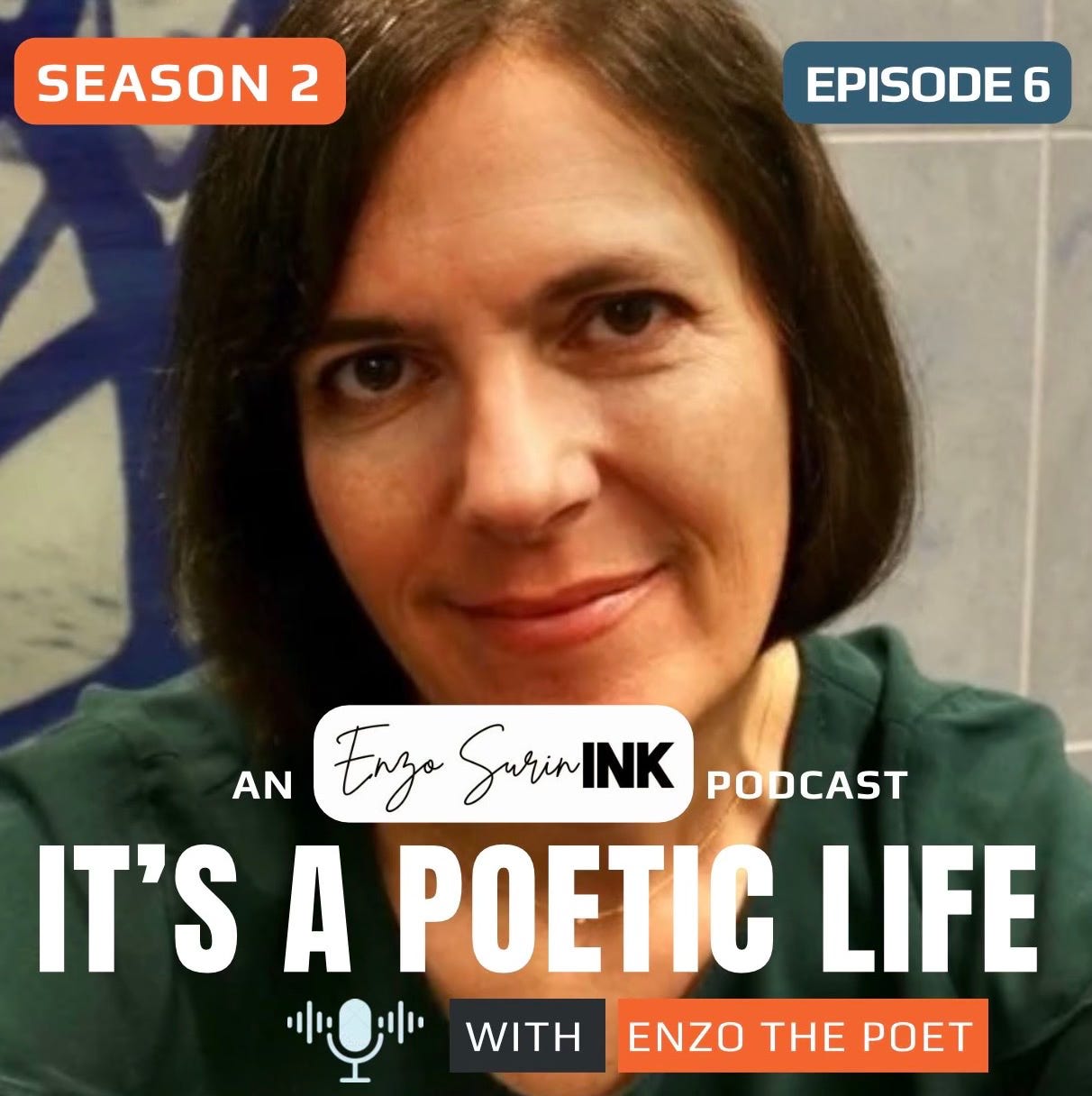
And that idea of making room brings me back to Rebecca, who is also a poet. She is making room for other people’s manuscripts in the same life where she has to make room for her own poems. I understand that exchange. As a publisher, editor, and writer, I know what it means for my own work to wait while I help another writer bring theirs forward.
There is labor in that. There is also love. And maybe devotion is what the numbers have trouble showing us. For all its machinery, publishing is still made of people caring deeply about words written by someone else. People making room in already full lives. People giving their attention to something that began in somebody else’s imagination. One writer. One editor. One publisher. One reader.
And then another.
That is what I loved about talking with Rebecca. We talked about publishing—the decisions, the editing, the work behind the work—but underneath it was another conversation about attention, about what it means to make room in your life for somebody else’s words.
Which, when I think about it, may be one of the stranger and more beautiful forms of devotion we have.
Enzo! This is such a beautiful and powerful piece. I’m so happy to be engaged in this publishing (and all the other things) life in a parallel way with you - the way you think and write about it is restorative to me, and inspiring. So grateful to be in community with you! Thank you again for our convo and the podcast and now this lovely reflection. ♥️